

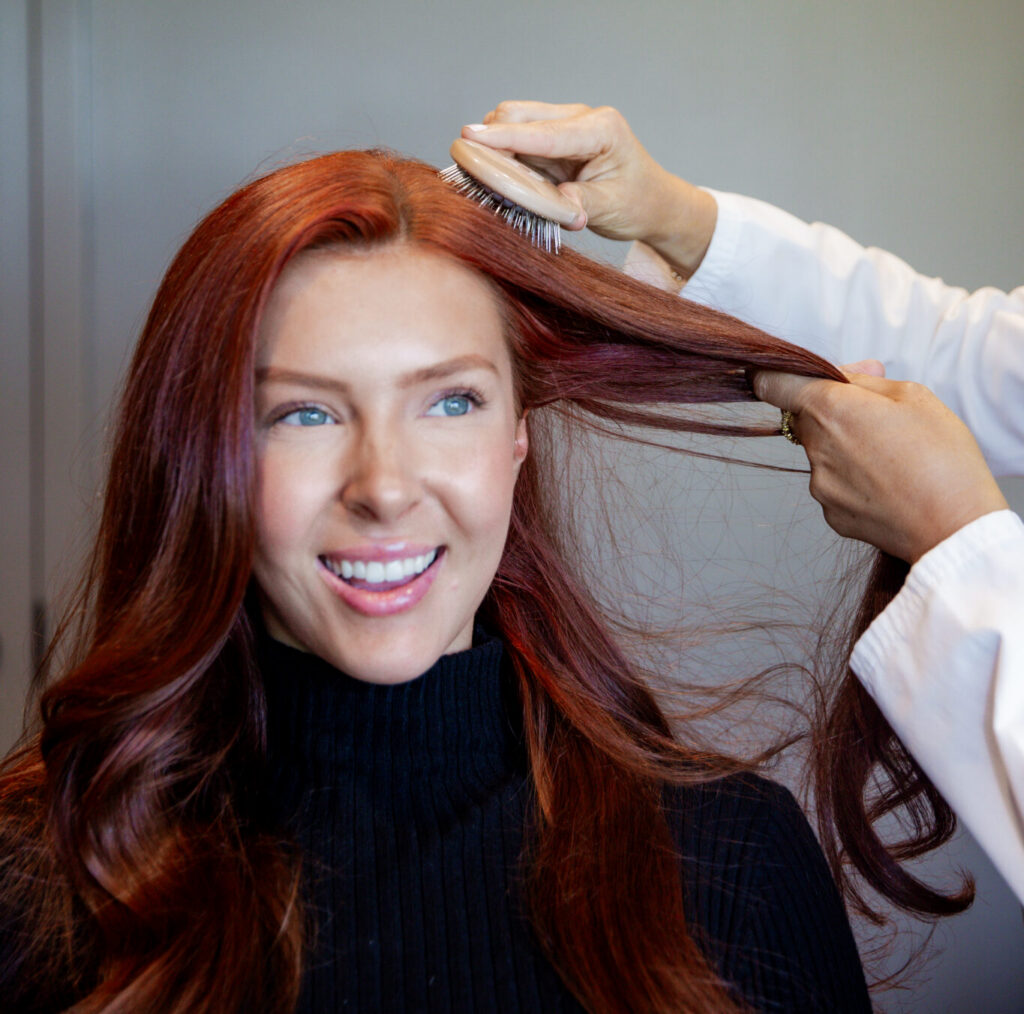
Discovering more hair than usual in your brush or shower drain can be unsettling. And while plenty of products are marketed as hair loss treatment for women, finding the right solution often starts with figuring out why your hair is falling out in the first place.
Hair loss can have many causes, including hormonal changes, nutritional deficiencies, stress, thyroid dysfunction, and metabolic issues. In some cases, bloodwork can provide important clues about what’s happening beneath the surface.
Rather than simply treating hair loss as a cosmetic concern, discovering what causes hair loss in women can help you and your healthcare provider put an end to the problem.
What Causes Hair Loss in Women?
Unfortunately, there isn’t one universal answer.
Women can experience temporary shedding after significant physical or emotional stress, during hormonal transitions, or following illness. Nutritional deficiencies, thyroid disorders, certain medications, insulin resistance, and inflammatory conditions can also contribute.
That’s why simply taking a hair-growth supplement or switching shampoos may not address the actual reason you’re losing hair. Below are a few of the most common root causes to look into as part of a comprehensive hair loss program.
1. Ferritin and Iron Stores
Iron deficiency can contribute to hair shedding, particularly in women who experience heavy menstrual periods or have other reasons for losing iron.
A standard iron test doesn’t always tell the whole story, though. Ferritin is a protein that stores iron, and measuring ferritin can provide information about your body’s iron stores.
This applies when looking into unexplained hair loss, since low iron stores might be linked to increased shedding, though the relationship between ferritin levels and hair loss is complex, and not everyone with low ferritin will have hair loss.
If your provider suspects iron deficiency, they may evaluate ferritin alongside other bloodwork rather than relying on a single number.
2. Thyroid Function
Your thyroid helps regulate numerous processes throughout the body. So thyroid dysfunction can affect more than your energy levels or metabolism. Changes in thyroid function can also affect the hair growth cycle. Both an underactive and overactive thyroid may be associated with hair changes, including thinning or increased shedding.
This is why thyroid hair loss may be considered when someone develops unexplained changes in their hair, particularly when other symptoms are present.
Depending on your symptoms and medical history, your provider may recommend thyroid testing to determine whether thyroid dysfunction could be contributing to your hair loss.
3. Hormone Imbalances
Hormonal changes are another important piece of the puzzle. Changes in estrogen, progesterone, and androgens can influence the hair growth cycle. This is one reason women may notice changes in their hair around major hormonal transitions, including after pregnancy, during perimenopause, or after stopping or changing certain forms of hormonal contraception.
Conditions associated with elevated androgen levels can also contribute to hair thinning in some women.
Hormone testing isn’t necessarily appropriate for everyone experiencing hair loss. Your provider can determine which tests, if any, make sense based on your symptoms, health history, and pattern of hair loss.
4. Stress
Does stress cause hair loss? It can. Major physical or emotional stress can lead to hair shedding.
One example is telogen effluvium, a temporary disruption of the hair growth cycle that can occur after a major stressor. Triggers can include significant illness, surgery, rapid weight loss, childbirth, or prolonged psychological stress.
Chronic stress can also affect sleep, eating habits, hormones, and other aspects of overall health, making it worth considering as part of the bigger picture.
5. Inflammation and Insulin Resistance
Hair loss can sometimes occur alongside metabolic or inflammatory issues.
Insulin resistance affects how the body responds to insulin and can be associated with hormonal changes that influence hair growth. As an example, women with polycystic ovary syndrome (PCOS) may experience hair thinning alongside other symptoms related to androgen and insulin regulation.
Inflammation can also affect overall health and may be relevant when evaluating certain types of hair loss or underlying autoimmune conditions.
Bloodwork may help identify clues that warrant further investigation, although there isn’t a single blood test that can diagnose every cause of hair loss.
6. Vitamin Deficiencies
Which vitamin deficiency causes hair loss? Well, there are a few.
Several nutrients are important for normal hair growth, including iron, vitamin D, vitamin B12, zinc, and other nutrients. However, hair loss isn’t automatically a sign that you’re deficient in a particular vitamin.
Taking high doses of supplements without knowing whether you actually need them can also be counterproductive. Testing can help determine whether a nutritional deficiency may be contributing to your symptoms so that treatment can be targeted rather than based on guesswork.
Seeking a Hair Loss Treatment for Women?
Hair loss can be frustrating, but it may also be your body’s way of signaling that something deserves attention. Instead of focusing exclusively on products designed to make your hair look fuller, consider taking a root-cause approach to understanding why the change is happening.
At Cult Aesthetics, we offer a data-driven hair loss program to determine what’s triggering your hair loss and develop an effective treatment plan based on real data.
Book a consultation at one of our locations to get started.