

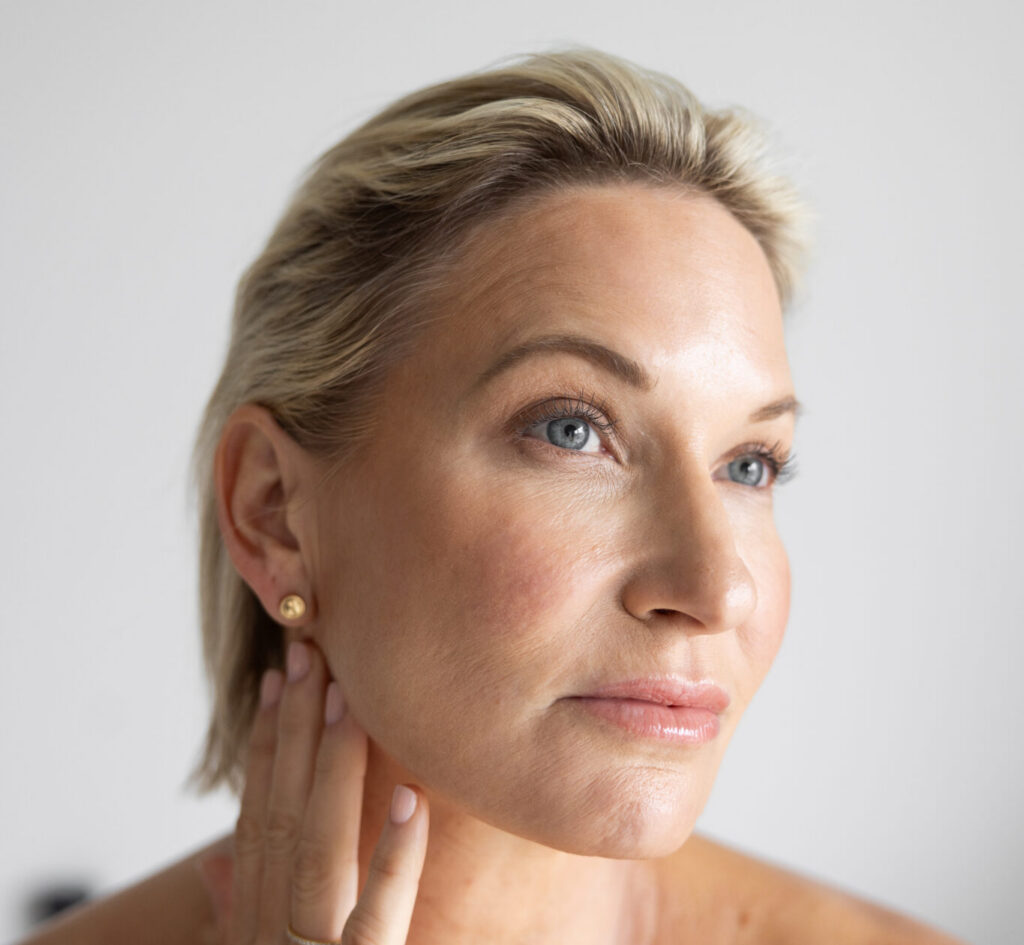
If you are on a GLP-1 medication semaglutide or a dual GLP-1/GIP agonist tirzepatide, you likely started it to lower your blood sugar, manage weight, or support your overall health. What many of my patients don’t expect is how these medications interact with the body’s largest organ: the skin.
As an Aesthetic and Wellness Nurse Practitioner, I hear questions about this every single day. Patients want to know whether GLP-1 medications can actually affect the health of their skin or whether the changes they are seeing are simply a result of losing weight.The answer is a little of both.
Early research suggests GLP-1 medications may influence inflammation, wound healing, and the way skin cells respond to stress. At the same time, losing a significant amount of weight, especially quickly, can reduce facial volume and make existing skin laxity more noticeable. And that’s where the term “Ozempic face” comes in.
How Does a Metabolic Drug Affect Skin?
GLP-1 receptors aren’t just located in your gut or pancreas, research shows they are present right in human skin tissue. The receptors sit directly on keratinocytes (the protective cells in your outer layer of skin) and fibroblasts (the powerhouses in your deeper dermal layer that manufacture collagen and elastin).
When GLP-1 medications bind to these skin receptors, they trigger pathways that govern how cells manage energy, repair damage, and fight off stress. These drugs can interact with your skin cells directly, not just through weight loss.
The Cellular Anti-Aging Signal
As cells age, some enter a state called cellular senescence. These cells stop functioning normally and can release inflammatory signals that may contribute to tissue aging. Researchers often use a protein called p21 as one marker of cellular senescence.
A 2026 pilot study published in Dermatologic Surgery looked directly at human skin. The study included only three men: two were taking GLP-1 receptor agonists and one was not. The researchers found lower epidermal p21 expression in the two participants receiving GLP-1 therapy.
There is also laboratory research pointing in a similar direction. In a 2025 Pharmaceutics study, semaglutide protected human dermal fibroblasts from oxidative stress and increased ATP production. Researchers also observed faster wound closure and changes in genes involved in extracellular matrix remodeling and inflammation.
Calming Inflammatory Skin Conditions
Psoriasis, hidradenitis suppurativa, and other inflammatory skin conditions are closely connected with metabolic health and systemic inflammation. Researchers are investigating whether GLP-1 medications may influence some of these inflammatory pathways.
A 2026 review from the National Psoriasis Foundation summarized the early clinical evidence in psoriasis. Some small studies have reported improvements in psoriasis severity among patients taking GLP-1-based medications, but the available studies are generally small and short-term.
Another Pharmaceutics review looked more broadly at inflammatory skin diseases, including psoriasis and hidradenitis suppurativa. It describes potential effects on inflammatory signaling and immune pathways.
Supporting Wound Repair
GLP-1 therapies are also being studied for wound repair, particularly for slow-healing diabetic ulcers. Reviews in the Journal of Investigative Dermatology highlight how these drugs suppress tissue-damaging inflammatory signals (like TNF-α), promote new blood vessel growth (angiogenesis), and help skin cells migrate to seal wounds.
The Flip Side: “Ozempic Face” and Skin Laxity
While GLP-1 signaling may protect skin cells under a microscope, rapid weight loss creates a very different physical reality on the surface.
A systematic review in Aesthetic Plastic Surgery looked at studies and confirmed that rapid weight loss from GLP-1s frequently leads to:
- Loss of structural facial fat pads (“Ozempic face”)
- Noticeable dermal thinning and loss of elasticity
- Redundant, sagging skin folds
When you lose fat quickly, the subcutaneous “cushion” supporting your face deflates faster than your skin can contract. The skin cell itself might be healthier, but the overall structure loses support.
How We Protect Your Skin During Weight Loss
You do not have to choose between reaching a healthy weight and preserving your skin’s structural integrity. The facial changes associated with GLP-1s are largely manageable when you take a proactive approach:
- Aim for Steady Weight Loss: Work with your prescribing provider to keep weight loss gradual rather than rapid, giving your skin time to adjust.
- Prioritize Protein Intake: Adequate protein feeds your body the amino acids required to synthesize collagen and preserve lean muscle mass.
- Hydrate Inside and Out: Rapid metabolic shifts require diligent water intake to maintain skin turgor and dermal volume.
- Partner with an Aesthetics Professional Early:Depending on your skin, facial structure, and goals, treatments such as biostimulatory injectables, microneedling, or a medical-grade skincare program should be considered as part of an individualized plan.
The Bottom Line
GLP-1 medications are a powerful medical tool. The goal isn’t to ask “will this drug replace my anti-aging serum?” but rather “how can we optimize your metabolic health while keeping your skin firm, lifted, and healthy along the way?”
If you’re currently on a GLP-1 journey, let’s build a customized aesthetic and skin-support plan that keeps you glowing from the inside out!
References
- Wyles S, Gopinath S, Lynn B, et al. Reduced Epidermal p21 Expression Is Identified in Some Subjects on Systemic GLP-1 Receptor Agonists: A Hypothesis-Generating Pilot Study of Metabolic Modulation in Human Skin Senescence. Dermatologic Surgery, 2026. PubMed Abstract
- Žaliukaitė G, Lebbar N. Effects of Glucagon-Like Peptide-1 Receptor Agonists on Skin Homeostasis and Skin Aging Processes. Journal of Clinical Medicine, 2026. PubMed Abstract
- Vyas K, Gopinath S, Dacso M, Green JB, Wyles S. Glucagon-Like Peptide-1 (GLP-1) Receptor Agonists and Cutaneous Biology: Implications for Skin Disease and Longevity. Dermatologic Surgery, 2026. PubMed Abstract
- Barone M, Brunetti B, D’Emilio R, et al. Effects of GLP-1 Receptor Agonists on Skin Quality: A Comprehensive Literature Review. Aesthetic Plastic Surgery, 2026. PubMed Abstract
- Narla S, Narla RR, Corbett JA. JAAD CME Part 1: Mechanism of Action of GLP-1 Receptor Agonists and Potential Pathways in Skin Health. Journal of the American Academy of Dermatology, 2026. PubMed Abstract
- Andrzejczak K, Kucharczyk E, Korgiel M, et al. GLP-1 Receptor Agonists in Chronic Inflammatory Skin Diseases: Immunometabolic Mechanisms and Translational Perspectives. Pharmaceutics, 2026. PubMed Abstract
- Anastasiou IA, Tentolouris A, Sarantis P, et al. Semaglutide Enhances Cellular Regeneration in Skin and Retinal Cells in Vitro. Pharmaceutics, 2025. PubMed Abstract
- Sheth S, Merola JF, Weber BN, et al. The National Psoriasis Foundation Primer on GLP-1 Receptor Agonists in Psoriasis: A Review. JAMA Dermatology, 2026. PubMed Search
- Ghebrehiwet-Kuflom J, Mehta A, Lim P, Dahle S, Isseroff RR. GLP-1 Receptor Agonists as Emerging Modulators of Inflammation and Angiogenesis in Chronic Cutaneous Wound Healing. Journal of Investigative Dermatology, 2025. PubMed Abstract