

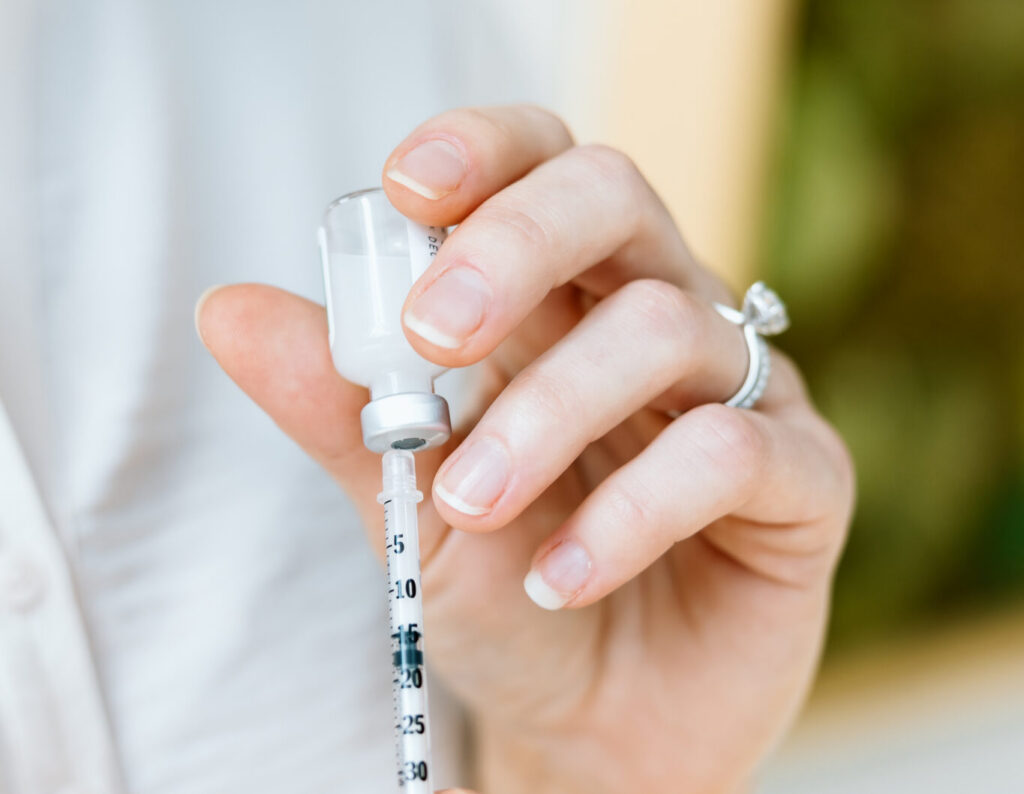
Regenerative medicine is emerging as a treatment for multiple modalities. Platelet-rich Plasma (PRP) is promising impressive results in musculoskeletal conditions. PRP uses the body’s growth factors, cytokines, and platelets as a natural approach to healing acute and chronic joint and soft tissue injuries. By injecting the area of concern with the use of ultrasound, it becomes precision medicine.
What is PRP and how does it work?
PRP is derived from the patient’s blood which is drawn and placed on a special centrifuge to isolate the components. With the proper technology, the PRP contains elevated levels of growth factors: vascular endothelial growth factor (VEGF), platelet-derived growth factor (PDGF), and transforming growth factor-beta (TGF-β). These all play roles in tissue repair, reducing inflammation, and promoting healing. Because it is autologous, the risk of rejection or reaction is virtually eliminated.
Are blind injections a thing of the past?
While injections using landmarks on the body are still being done, a systematic review and meta-analysis of random controlled trials show that using ultrasound-guided injections are more accurate and reduce post injection pain. Ultrasound guided injections allow the growth factors to be injected directly in the damaged or degenerated tissue.
PRP for the Knee
Knee Arthritis is one of the most common disabling conditions worldwide and PRP has been studied most extensively in this area. Multiple systematic reviews and meta-analyses have shown PRP outperforms hyaluronic acid injections, the most commonly prescribed injection. In
comparison, pain improvement is greater at 6 and 12 months. Importantly the quality of the PRP matters, the higher concentration yields durable benefits.
PRP for the Shoulder
The most common shoulder conditions: rotator cuff tendinopathies and adhesive capsulitis also have shown to improve with PRP injections. A 2026 meta-analysis of 10 random controlled trials show PRP outperforms corticosteroid injections. Patients had improved pain and function after 6 months with fewer adverse events. While arguments for corticosteroids are that they provide faster relief, they are also associated with increased need for surgery due to its catabolic effects.
PRP for the Elbow
A common syndrome of the elbow, lateral epicondylitis, aka tennis elbow, has extensive evidence to support PRP injections. A comprehensive systematic review of 33 studies and 2400 patients shows success rates of PRP injections from 36% to 100%. When compared to corticosteroids, PRP injections provided significant long-term benefits for both pain control and function.
Ultrasound Guided PRP Musculoskeletal Injections
The biological healing potential of PRP combined with the precision of ultrasound technology is clearly the preferred choice long term for people struggling with pain and limitations secondary to knee osteoarthritis, rotator cuff tendinopathy, adhesive capsulitis, and lateral epicondylitis.
References
Bennell, K. L., Paterson, K. L., Metcalf, B. R., et al. (2021). Effect of Intra-articular Platelet-Rich Plasma vs Placebo Injection on Pain and Medial Tibial Cartilage Volume in Patients With Knee Osteoarthritis. JAMA.
Bensa, A., Previtali, D., Sangiorgio, A., et al. (2025). PRP Injections for the Treatment of Knee Osteoarthritis: The Improvement Is Clinically Significant and Influenced by Platelet Concentration: A Meta-Analysis of Randomized Controlled Trials. The American Journal of Sports Medicine.
Finnoff, J. T., Awan, T. M., Borg-Stein, J., et al. (2021). American Medical Society for Sports Medicine Position Statement: Principles for the Responsible Use of Regenerative Medicine in Sports Medicine. Clinical Journal of Sport Medicine.