

While so many people love the look of a tan, sun exposure can leave its mark on your skin in more ways than one. From dark spots and fine lines to uneven texture and discoloration, years of UV exposure can accelerate skin aging.
However, some of those changes are things you cannot ignore. Rough, scaly patches may be actinic keratoses, precancerous lesions that require medical evaluation and treatment.
People often turn to laser treatments to reverse sun damage, but can they also treat precancerous spots? Let’s find out, and we’ll also explore the signs of sun damage so you know what to watch for.
Recognizing the Warning Signs of Sun Damage on Skin
Sun damage develops gradually the more your skin is exposed to the sun, and its effects tend to become more noticeable with age. Some changes affect your skin’s appearance, while others may signal a more serious concern. That’s why it’s important to know the difference.
Common signs of sun damage on skin include:
- Age Spots and Discoloration: Also called sunspots, these flat brown or tan spots often appear on the face, hands, shoulders, and other areas frequently exposed to sunlight. (Not to be confused with freckles!)
- Fine Lines and Wrinkles: UV radiation damages collagen and elastin, which are the proteins that help keep skin firm and flexible. Over time, sun damage can contribute to premature wrinkles and a loss of elasticity.
- Uneven Texture and Redness: Sun exposure can leave skin feeling rough or looking blotchy with visible small blood vessels in some areas.
- Rough, Scaly Patches: These spots may be actinic keratoses, which usually develop after years of UV exposure. They can feel dry, crusty, or sandpaper-like, and may appear pink, red, brown, or skin-colored.
While some signs of sun damage are harmless, actinic keratoses require medical attention. Some can progress to become squamous cell carcinoma, which is a type of skin cancer. Always have a medical professional evaluate any spot that persists, bleeds, crusts, changes in appearance, or develops into a sore that doesn’t heal.
Can Laser Treatment for Sun Damage Help?
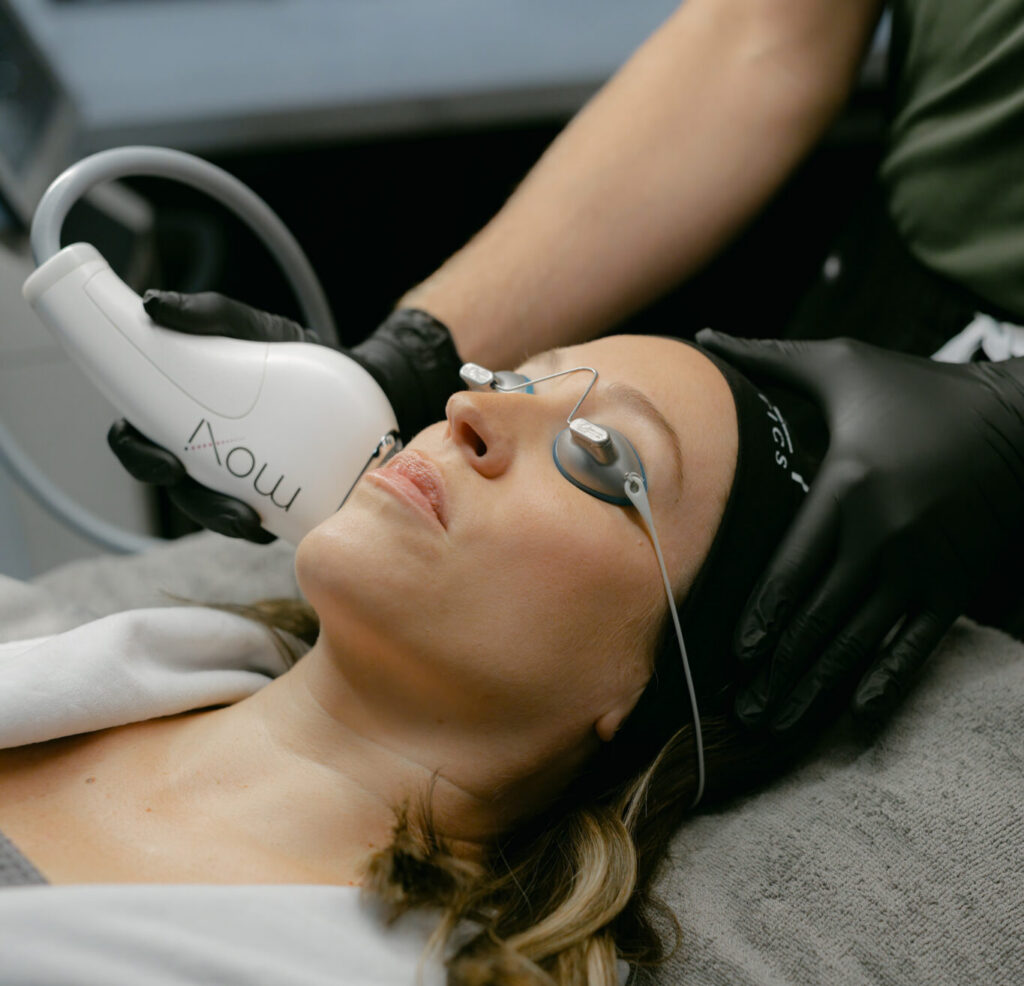
Laser treatments can improve several visible signs of sun damage, helping skin look smoother and more even. Depending on your skin concerns, a medical aesthetics provider may recommend a laser or light-based procedure to address pigmentation, texture changes, or redness. Different treatments are designed for different concerns.
For example, resurfacing lasers like UltraClear work by removing the top layers of skin to promote renewal and stimulate collagen production (which can improve some of the signs of aging). Vascular lasers target blood vessels and can reduce certain types of redness.
The best approach will vary from person to person, depending on your skin type, the degree of sun damage, and your medical history. Some treatments will require several sessions, and some will involve downtime. You won’t be a suitable candidate for every treatment.
Actinic Keratosis Treatment: What Are the Options?
Actinic keratoses are precancerous skin lesions caused by UV exposure. They often develop on areas of the body most frequently exposed to the sun, such as the face, scalp, ears, forearms, and backs of the hands. Because some actinic keratoses can progress to squamous cell carcinoma, early evaluation and treatment are crucial.
A professional can suggest the most suitable actinic keratosis treatment based on the number, location, and characteristics of the lesions. Common options include:
- Cryotherapy: Liquid nitrogen freezes individual lesions, causing the treated tissue to blister or peel away as the skin heals.
- Prescription Topical Medications: Creams or gels, including 5-fluorouracil and imiquimod, can treat visible lesions and broader areas of sun-damaged skin.
- Ablative Laser Treatment: Because ablative lasers remove the outer layers of the skin, they will destroy the damaged area and allow new skin to appear in its place.
Other options exist for removing actinic keratoses, but these are some of the most common. Your provider will go over the pros and cons of each one to help you make the best decision.
Protecting Your Skin from Further Sun Damage
While treatments can improve some visible signs of sun damage, protecting your skin from further UV exposure is essential to maintain results and support long-term skin health.
Remember to wear sunscreen every day. A broad-spectrum sunscreen such as the Alastin HydraTint Pro Mineral Sunscreen will protect you against both UVA and UVB rays. Don’t forget protective clothing, like long sleeves, sunglasses, and a wide-brimmed hat. You can go one step further and use a sunshield.
Most importantly, schedule regular skin checks with a dermatologist. An annual check-up is a great way to evaluate current spots. Then you can monitor your skin for new spots or changes between appointments.
Interested in a Laser Treatment for Sun Damage?
Sun damage affects both the appearance and health of your skin. Laser treatments are one option if you want to restore your skin’s youthful glow and reduce signs of aging. If you’re interested in discussing your options, the team at Cult Aesthetics can help.
Schedule a consultation at one of our locations to learn about our services.
